When we design foundations in Charlotte, the first question is always about shear strength. The IBC 2021 and ASCE 7-22 require site-specific strength parameters, and the most reliable way to obtain them is through the triaxial test. Charlotte sits on Piedmont geology – deep residual soils from weathered granite and gneiss that behave nothing like sedimentary deposits. We run consolidated-drained (CD) and consolidated-undrained (CU) tests with pore pressure measurement following ASTM D2850-15 and D4767-11. For projects involving cut slopes or deep excavations, we also correlate results with a compression simple test to validate unconfined strength. The triaxial test gives us the effective stress envelope we need for every retaining wall and spread footing in this region.
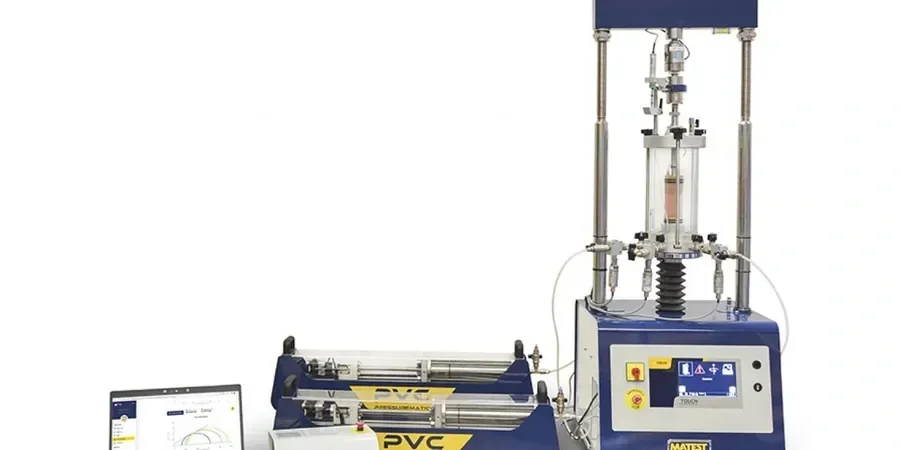
In Piedmont residual soils, the triaxial test reveals effective cohesion values near zero – relying on unconfined strength alone can overestimate stability by 40%.
Scope of work
Area-specific notes
Charlotte's humid subtropical climate means the water table fluctuates seasonally, and the residual soils can lose significant strength when saturated. The biggest risk we see locally is assuming drained parameters for temporary excavations during the wet spring months. A triaxial test run on saturated specimens at in-situ density will show you the true undrained strength – often 30 to 50% lower than the dry value. We also see problems when designers use generic friction angles from published tables without running the triaxial test on the actual soil. The saprolite in South Charlotte near the Catawba River can have friction angles 10 degrees lower than the same formation in the northeast part of the city. That variability only shows up in the lab.
Standards used
ASTM D2850-15: Standard Test Method for Unconsolidated-Undrained Triaxial Compression Test, ASTM D4767-11: Standard Test Method for Consolidated-Undrained Triaxial Compression Test, ASTM D7181-20: Method for Consolidated Drained Triaxial Compression Test for Soils, IBC 2021 Chapter 18: Soils and Foundations – site-specific strength parameters
Linked services
CU Triaxial with Pore Pressure (ASTM D4767)
For foundation design and slope stability analysis in clayey residual soils. Three specimens tested at different confining pressures, with pore pressure measurements throughout shearing. Delivers effective stress parameters c' and φ' for drained and undrained conditions. Results within 10 business days.
CD Triaxial (ASTM D7181)
For long-term stability of embankments, retaining walls, and cut slopes where full drainage occurs. Slow drained shearing at 0.1% per minute. Ideal for granular residual soils and compacted fills. Includes stress-strain curves and volume change data.
Typical parameters
Top questions
How does the triaxial test differ from the unconfined compression test for Charlotte soils?
The unconfined test (ASTM D2166) gives you qu – the compressive strength with no confining pressure. In Charlotte's residual soils, that value can be misleading because the soil in the ground is always under some confining stress. The triaxial test applies a cell pressure that simulates the actual overburden, so you get the real effective stress envelope. For saprolite, unconfined tests often overestimate cohesion by 50% or more.
What sample quality is required for a reliable triaxial test in Piedmont soils?
We need undisturbed samples from thin-wall Shelby tubes – 3-inch diameter minimum. The sample must be extruded carefully to avoid disturbance of the soil fabric. If the sample shows cracks, roots, or significant gravel (>10% by volume), we recommend taking a new sample. Disturbed samples will give you friction angles that are 5 to 8 degrees lower than the true value.
How much does a triaxial test cost for a typical residential project in Charlotte?
For a standard set of three CU triaxial tests with pore pressure (ASTM D4767), the cost ranges between US$1,790 and US$2,380 depending on the number of specimens and the required turnaround. CD tests run slightly higher due to longer shearing time. Volume discounts apply for multi-borehole projects.