In the dynamic terrain of Charlotte and greater Mecklenburg County, managing natural and engineered slopes is a critical component of geotechnical engineering. The Slopes category encompasses the full lifecycle of assessment, design, and stabilization of inclined ground surfaces, whether they are naturally occurring hillsides or man-made embankments. From the initial phases of a comprehensive slope stability analysis to the implementation of robust retention systems, this discipline is fundamental to safeguarding infrastructure, protecting property, and ensuring public safety. The region's ongoing urban expansion into piedmont areas with rolling topography makes understanding and mitigating slope-related risks not just a best practice, but a regulatory and economic necessity for developers, municipal planners, and private landowners alike.
Charlotte's geological setting presents a unique set of challenges that directly influence slope behavior. The area is underlain by the deeply weathered igneous and metamorphic rocks of the Piedmont physiographic province, resulting in a characteristic profile of residual soils, primarily silty sands and sandy silts, over partially weathered rock known as saprolite. This saprolitic material can maintain the structure of the parent rock but lose significant strength when disturbed or saturated. The steep, man-made cuts common in residential and commercial developments are particularly susceptible to shallow, translational landslides triggered by heavy rainfall events, which are frequent in North Carolina's humid subtropical climate. This makes a thorough debris flow analysis essential for any project near steep drainage channels or at the base of long slopes.
The regulatory framework governing slope design and construction in Charlotte is primarily enforced through the North Carolina Building Code, which adopts the International Building Code (IBC) with state-specific amendments. Chapter 18 of the IBC, concerning Soils and Foundations, is central, establishing the requirement for geotechnical investigations where slopes are steeper than 1 unit vertical to 3 units horizontal (1V:3H). Additionally, the Charlotte-Mecklenburg Storm Water Design Manual dictates stringent standards for erosion and sediment control, which are inextricably linked to slope performance during and after construction. Local zoning ordinances may also impose hillside development restrictions, requiring a geotechnical report sealed by a licensed professional engineer to demonstrate that a proposed development will not create a hazard to life or property from slope instability. Adherence to these norms is mandatory for permit approval.
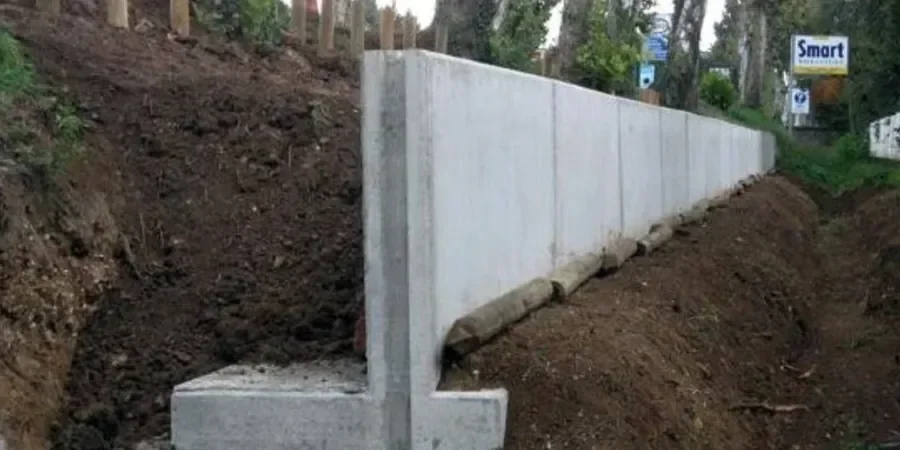
The application of slope engineering in Charlotte spans a diverse range of project types. High-density residential subdivisions carved into the county's hillsides demand innovative solutions like geocell design for vegetated, load-bearing slope faces that prevent erosion. Commercial real estate developments with deep building excavations require sophisticated earth retention, often leading to the selection of a sheet pile wall design for temporary shoring or a permanent, high-capacity diaphragm wall design in urban settings with adjacent structures. For infrastructure projects, such as the widening of interstates I-77 or I-485, massive MSE (Mechanically Stabilized Earth) wall design has become the standard for constructing tall, steepened embankments efficiently and cost-effectively. Each project type demands a tailored approach, moving from general stability concepts to a specific slope stabilization design that integrates soil nailing, rock bolts, or a complete retaining wall design to achieve a permanent, resilient solution.
Available services
Slope stability analysis
→ Ver detalleDebris flow analysis
→ Ver detalleGeocell design
→ Ver detalleSlope stabilization design
→ Ver detalleRetaining wall design
→ Ver detalleMSE (Mechanically Stabilized Earth) wall design
→ Ver detalleDiaphragm wall design
→ Ver detalleSheet pile wall design
→ Ver detalleLandslide assessment
→ Ver detalleGeotechnical slope monitoring (monthly)
→ Ver detalleCommon questions
What are the most common triggers for slope failures in the Charlotte region?
The primary trigger is intense or prolonged rainfall that saturates the residual Piedmont soils and saprolite, reducing suction and shear strength. Human activities like unregulated fill placement, improper grading that steepens or undercuts slopes, and poor drainage management are also major contributing factors to both natural and engineered slope failures.
When is a geotechnical investigation for slope stability required by code in Charlotte?
A geotechnical investigation is mandated by the North Carolina Building Code (IBC Chapter 18) for any proposed construction on a site with existing slopes steeper than 1 vertical to 3 horizontal (1V:3H). The report must address slope stability, bearing capacity, and provide design recommendations to ensure the safety of the development and adjacent properties.
What is the difference between a global stability failure and a surficial erosion problem?
A global stability failure involves a deep-seated rotational or translational movement of a large soil mass along a failure surface, threatening entire structures. Surficial erosion is the shallow removal of soil particles by water and wind, typically addressed with vegetative cover, erosion control blankets, or geocell confinement, and does not typically indicate a deep-seated instability.
How long does a typical engineered slope stabilization solution need to last?
Permanent slope stabilization solutions, such as retaining walls or soil nail systems, are designed for a minimum service life of 50 to 75 years, aligning with the design life of the supported infrastructure. Temporary shoring systems for construction excavations are typically designed for 12 to 36 months and must be monitored throughout their service period.