Charlotte sits on a mix of Piedmont residual soils and alluvial deposits along the Catawba River valley. The clay-rich saprolite can hold contaminants from decades of industrial use. For any contaminated soil remediation project, understanding the subsurface is the first step. We start with detailed soil sampling and geophysical screening to map the vertical and lateral extent of impacted zones. This approach reduces surprises during excavation and cuts overall project risk. The local geology makes it essential to integrate borehole sampling with SPT to capture both strength parameters and contaminant distribution in a single operation.
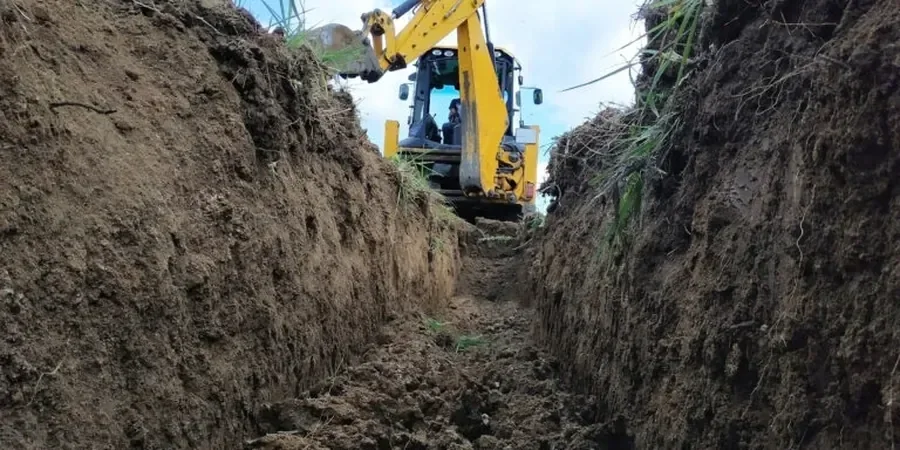
Shallow groundwater within 3 to 6 meters in Charlotte demands careful contaminant mapping and hydraulic control during remediation.
Scope of work
Area-specific notes
The Piedmont residual soils of Charlotte contain variable amounts of clay that can adsorb heavy metals and organic compounds. That sounds helpful, but it creates long-term risk if contaminant concentrations exceed the soil's sorption capacity. Without proper geotechnical characterization, remediation strategies like soil vapor extraction or chemical oxidation can miss zones of low permeability. We have seen cases where chlorinated solvents migrated along saprolite fractures undetected by conventional sampling. A phased approach with high-resolution site characterization (HRSC) is the only way to build a reliable conceptual site model for contaminated soil remediation in Charlotte.
Watch how it works
Standards used
ASTM E1903-19 (Phase II Environmental Site Assessment), EPA SW-846 (Test Methods for Evaluating Solid Waste), NC DEQ Inactive Hazardous Sites & Brownfields Program (15A NCAC 13A)
Linked services
Site Characterization & Risk Assessment
We develop a conceptual site model through soil boring, groundwater monitoring well installation, and laboratory analysis. Deliverables include a Phase II report with risk-based screening against NC DEQ standards and recommendations for remedial action.
Remediation Design & Oversight
From excavation support to in situ treatment, we design remedial systems that respect the local hydrogeology. Services include soil vapor extraction, chemical oxidation, bioremediation amendments, and long-term monitoring plans. We coordinate with environmental engineers and contractors to ensure closure.
Typical parameters
Top questions
How does Charlotte's geology affect contaminated soil remediation?
Charlotte sits on Piedmont residual soils with high clay content and shallow groundwater. The clay can adsorb contaminants, making extraction harder, while the shallow water table can spread dissolved-phase plumes laterally. A high-resolution site characterization is essential to map both the soil and groundwater pathways.
What regulatory program applies to contaminated soil remediation in Charlotte?
Most remediation projects in Charlotte fall under the North Carolina DEQ Inactive Hazardous Sites & Brownfields Program (15A NCAC 13A). Sites with federal involvement may also follow RCRA corrective action or CERCLA. We help clients navigate the risk-based screening levels and closure requirements.
What is the typical cost range for a contaminated soil remediation project in Charlotte?
For a standard site characterization with 8–12 borings, field screening, and laboratory analysis, costs range between US$3,220 and US$14,410 depending on contaminant complexity, depth, and the number of analytes. Full remedial design and oversight is quoted per project.
How long does a Phase II assessment and remediation design take?
A Phase II assessment typically takes 3–6 weeks from mobilization to final report. Remediation design adds another 2–4 weeks after the conceptual site model is approved. Timelines extend if groundwater monitoring or treatability studies are required.
Do you provide long-term monitoring after remediation?
Yes. We design and execute long-term monitoring plans that include quarterly or semi-annual groundwater sampling, soil vapor monitoring, and performance metrics against the site-specific cleanup goals. Monitoring duration is typically 1–3 years depending on the remedial technology and regulatory requirements.