A common mistake we see from builders new to Charlotte is assuming a standard gravity wall will work anywhere. The Piedmont geology here is deceptive — deep residual soils over weathered rock can shift dramatically with moisture. Without proper subsurface data, walls crack or tilt within two years. We start every retaining wall design project with site-specific borings and lab testing. Then we model active and passive earth pressures based on actual soil strength parameters. Many contractors skip the drainage analysis, which is critical given Charlotte's 43 inches of annual rainfall. We never do. Getting the soil mechanics right from day one prevents callbacks and expensive repairs. For tricky sites with high groundwater, we often recommend a presurometro test to measure in-situ lateral stress directly.
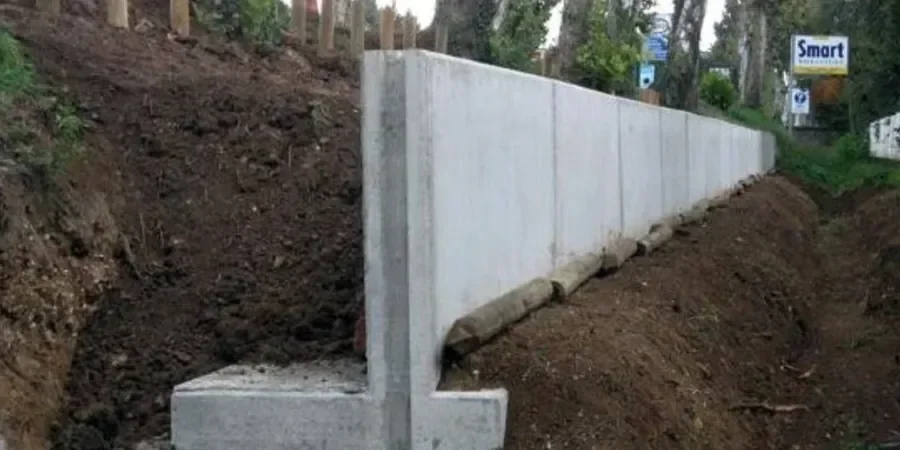
Charlotte's Piedmont soils lose strength rapidly when wet — our design models account for that seasonal shift before the wall is built.
Scope of work
Area-specific notes
Charlotte sits at roughly 750 feet above sea level, but the elevation change across a single lot can exceed 30 feet. That topography, combined with the region's clay-rich residual soils, creates real risk for retaining wall failures. We've seen walls designed with no consideration for hydrostatic pressure — water builds up behind the wall and pushes it over. Another risk is underestimating surcharge loads from nearby structures or heavy equipment. In our experience, walls that fail in Charlotte do so within the first five years. A proper retaining wall design must factor in both short-term construction conditions and long-term soil saturation cycles. We run slope stability checks using Spencer's method to verify global stability before finalizing any design.
Standards used
IBC 2021 (Sections 1807, 1808), AASHTO LRFD Bridge Design Specifications (9th Ed.), ASTM D3080 (Direct Shear Test), ASTM D2487 (Unified Soil Classification)
Linked services
Gravity and Cantilever Wall Design
For walls up to 12 feet, we design reinforced concrete cantilever or modular block gravity walls. Our work includes bearing capacity checks, sliding resistance, overturning stability, and internal drainage design per IBC 1807.
Mechanically Stabilized Earth (MSE) Wall Design
For taller walls or poor foundation soils, we design MSE walls with geogrid or steel strip reinforcement. We calculate pullout resistance, connection strength, and global stability using AASHTO LRFD methods.
Typical parameters
Top questions
What soil tests are needed before designing a retaining wall in Charlotte?
We typically run a combination of Standard Penetration Tests (SPT), direct shear, Atterberg limits, and natural moisture content. For walls over 8 feet, we also recommend a consolidation test to estimate long-term settlement behind the wall.
Do I need a retaining wall permit in Mecklenburg County?
Yes. Any wall over 4 feet in height or that supports a surcharge requires a permit. Our design package includes stamped calculations, soil reports, and drainage plans that meet IBC and local amendment requirements.
How much does professional retaining wall design cost in Charlotte?
The typical range is US$1,040 to US$3,840 depending on wall height, soil complexity, and whether seismic checks are needed. This includes field investigation, lab testing, and stamped design drawings.
What drainage system do you recommend for retaining walls here?
We specify a 12-inch granular drainage blanket wrapped in geotextile, with a perforated pipe at the base tied to daylight or a storm system. Without this, hydrostatic pressure builds quickly during Charlotte's rainy season.