We roll out our drilling rigs and hand augers across Mecklenburg County for landfill geotechnics projects. The rigs are equipped with hollow-stem augers to sample the clay-rich residual soils common in Charlotte. Before we break ground, we review the site’s waste history and hydrology. Then we drill borings to verify the natural barrier’s thickness. One project near the U.S. National Whitewater Center required continuous sampling through 40 feet of saprolite. That data informed the liner system’s design. We also run field permeability tests to confirm the clay’s hydraulic conductivity meets state regulations. It’s straightforward work, but it demands precision. Every boring log becomes part of the closure plan. We complement this with infiltration tests to evaluate leachate migration paths and resistivity surveys where buried waste boundaries are uncertain.
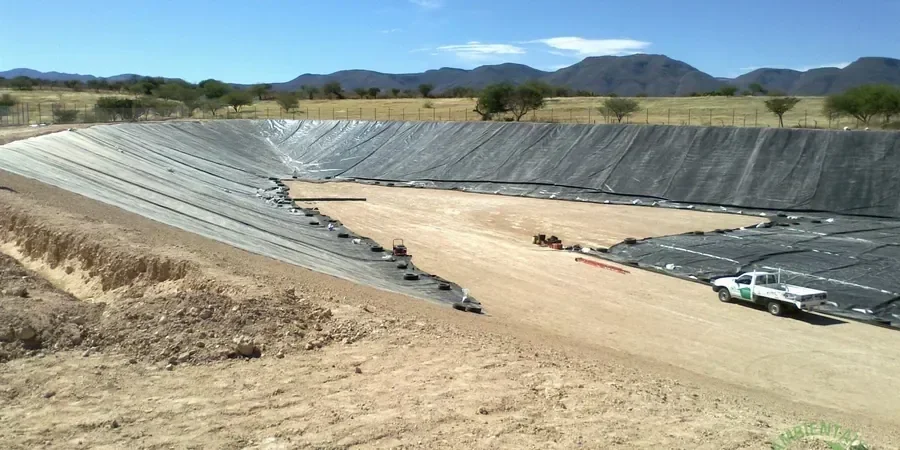
In Charlotte, the natural clay barrier can meet liner standards if you confirm its thickness and conductivity with site-specific borings.
Scope of work
Key parameters we measure include:
- Natural moisture content and Atterberg limits (ASTM D4318)
- Compaction curves via standard Proctor (ASTM D698)
- Hydraulic conductivity from flexible-wall permeameters
- Shear strength from consolidated undrained triaxial tests
Area-specific notes
One risk we see often in Charlotte is perched water above the liner. The Piedmont’s weathered rock can create discontinuous water tables. If you don’t install lateral drains, that water builds pressure and blows out the side slope. We’ve seen it happen on a cell expansion near the airport. The owner had to excavate and replace 30 feet of failed liner. That cost triple the original budget. Proper drainage design and a good dilatometer test for stress history can prevent this. Another common issue is differential settlement at waste-to-native soil interfaces. Our settlement analyses always include staged loading and time-rate consolidation curves.
Standards used
ASTM D1586 Standard Penetration Test, ASTM D698 Standard Proctor Compaction, ASTM D5084 Hydraulic Conductivity, NC DEQ Solid Waste Management Rules (15A NCAC 13B)
Linked services
Liner and Barrier System Design
We design compacted clay liners and composite geomembrane systems. Our work includes permeability testing, interface shear testing, and construction quality assurance. We follow ASTM D5084 and local NC DEQ requirements.
Slope Stability and Settlement Analysis
We run 2D limit-equilibrium analyses for waste slopes and foundation soils. We also calculate consolidation settlement under waste loads. Our reports include factors of safety for static, seismic, and rapid-drawdown conditions.
Typical parameters
Top questions
What makes landfill geotechnics in Charlotte different from other regions?
Charlotte sits on Piedmont residual soils — deep, clay-rich saprolite with variable permeability. Unlike coastal plains, our natural barrier can sometimes meet liner standards without importing clay. But the weathered rock creates complex groundwater flow paths. We always drill multiple borings to map the soil profile and confirm hydraulic conductivity.
What tests are required for landfill liner certification in North Carolina?
NC DEQ requires compaction tests (ASTM D698), hydraulic conductivity (ASTM D5084), and Atterberg limits (ASTM D4318) for clay liners. For geomembranes, we also run seam shear and peel tests. The target hydraulic conductivity is 1×10⁻⁷ cm/s or less.
How much does a landfill geotechnics study cost in Charlotte?
A full study including borings, lab tests, and a design report typically ranges between US$2.270 and US$7.300. The final cost depends on the number of borings, depth of sampling, and whether you need a geomembrane design. We provide a fixed-price quote after the site walk.