Charlotte sits over the Carolina Slate Belt, where residual soils from weathered metamorphic rock dominate the subsurface. These silty sands and clayey silts can vary from permeable to nearly impermeable within the same lot. That is why an infiltration test in Charlotte must be site-specific. The Piedmont geology here creates a complex pattern of saprolite layers, often with shallow bedrock or clay lenses that block vertical flow. We use the double-ring infiltrometer to isolate vertical percolation and record steady-state rates. Before we run the test, we often pair it with a permeability field test to cross-check results across different depths. The data directly informs stormwater detention designs and septic system sizing.
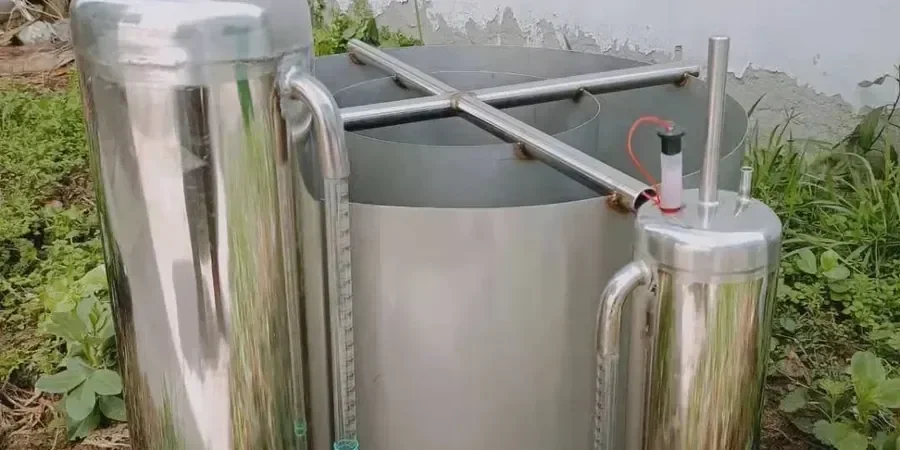
Infiltration rates in Charlotte’s Piedmont soils can drop by half after just 12 inches of depth due to clay lenses from weathered mica schist.
Scope of work
Area-specific notes
The biggest risk in Charlotte is assuming uniform infiltration across the site. We have seen cases where a single test in the front yard showed 1.8 in/hr, but the back yard had clay-filled fractures that dropped to 0.3 in/hr. The North Carolina Department of Environmental Quality requires a minimum of three tests per acre for stormwater permits. If you rely on one test, your basin may underperform or overflow. That is why we always recommend running at least two double-ring tests plus a falling-head test to verify. Charlotte clay soils also pose a risk of ponding during construction if infiltration is overestimated. We follow ASTM D3385-18 strictly and document every variable.
Standards used
ASTM D3385-18 (Standard Test Method for Infiltration Rate of Soils in Field Using Double-Ring Infiltrometer), North Carolina DEQ Stormwater Design Manual (2017), IBC 2018 Appendix C – Soil Classification and Permeability
Linked services
Double-Ring Infiltrometer Test
Two concentric rings driven 6 inches into the ground, constant head maintained per ASTM D3385. Results in in/hr with time-saturation curves.
Single-Ring Infiltrometer (Pilot)
Faster screening test for preliminary feasibility. Uses a single 12-inch ring with 30-minute saturation. Good for early-stage due diligence.
Deep Borehole Permeability Test
For deeper percolation zones up to 15 feet. We install a PVC casing and conduct a falling-head test to measure hydraulic conductivity in saprolite.
Soil Classification & Moisture Content
Grain size analysis and natural moisture content per ASTM D422 and D2216. Essential for correlating infiltration rates with soil type.
Typical parameters
Top questions
How long does an infiltration test take in Charlotte?
A standard double-ring test takes 4 to 8 hours on site, including saturation and steady-state recording. We usually complete three tests across a 1-acre lot in one day.
What is the typical infiltration rate for Piedmont soils in Charlotte?
Rates vary widely. We commonly see 0.5 to 2.0 inches per hour in silty sands, but clay-rich saprolite can drop below 0.2 in/hr. Always test per NC DEQ guidelines.
Do I need an infiltration test for a residential septic system in Charlotte?
Yes. Mecklenburg County requires a percolation test or infiltration test for any new septic system. The double-ring method is the preferred field test for permit approval.
What is the cost of a double-ring infiltrometer test in Charlotte?
A typical test costs between US$270 and US$470 per location, depending on depth and access. Bulk discounts apply for multiple tests on the same site.