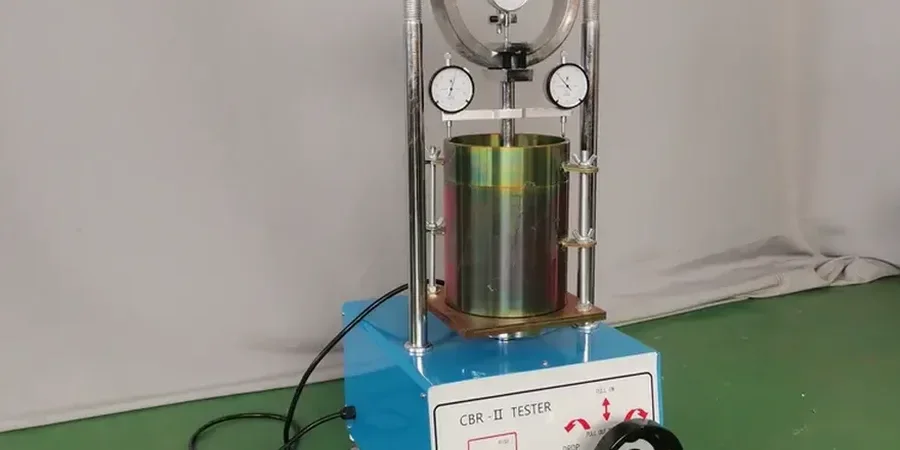
In Charlotte, we often see pavement designs based on assumed values rather than actual test data. That leads to failures within two or three years. We run the laboratory CBR test on undisturbed or recompacted samples to get real numbers for pavement thickness design. The Piedmont region has residual soils from granite and gneiss, which behave very differently under traffic loads than transported soils. A standard subrasante vial evaluation without CBR data is incomplete. That is why we insist on this parameter for every road project we touch.
A soaked CBR value below 3 in Charlotte saprolite usually requires lime stabilization or a geogrid layer before placing subbase.
Scope of work
Area-specific notes
Charlotte summers bring heavy afternoon thunderstorms. The water table can rise several feet in a single week. If your subgrade is not tested under soaked conditions, you risk pumping and rutting within the first rainy season. The Piedmont clay fraction is often kaolinite, which has low plasticity but can lose 50% of its strength when wet. We have seen parking lots in University City fail in under a year because the CBR was estimated instead of measured. A proper laboratory CBR test prevents that.
Standards used
ASTM D1883-16, AASHTO T-193, IBC 2021 Chapter 18
Linked services
Soaked CBR on undisturbed samples
We take Shelby tube samples from the subgrade at the planned depth. The test includes moisture-density relationship, 96-hour soak, and penetration at two rates. Results include swell percentage.
Recompacted CBR for design alternatives
For projects where the subgrade will be reworked, we prepare specimens at target dry density and moisture content. We test three energy levels to plot the CBR-density curve.
Typical parameters
Top questions
How long does a laboratory CBR test take in Charlotte?
The full test cycle takes 5 to 7 business days. The 96-hour soak period is the fixed time, plus sample preparation and penetration testing. Rush service at 3 days is available for an additional fee.
What is the difference between soaked and unsoaked CBR?
Soaked CBR simulates worst-case moisture conditions after rain. Unsoaked CBR gives a value at the as-compacted moisture content. In Charlotte, the soaked value can be 40 to 60 percent lower than the unsoaked one, especially in clay-rich saprolite layers.
Can you test CBR on samples from a test pit?
Yes. We can take bulk samples from test pits and recompact them in the lab at field density. Alternatively, we can drive thin-walled tubes into the pit wall for undisturbed specimens. Both methods follow ASTM D1883 procedures.
Do you provide CBR testing for pavement forensic work?
Absolutely. We have done forensic CBR tests on cores taken from failed pavements in Charlotte. The test helps determine if the subgrade strength was overestimated during design. We correlate results with field plate load tests when needed.